

1. The Risk: Can Precum Cause Pregnancy?
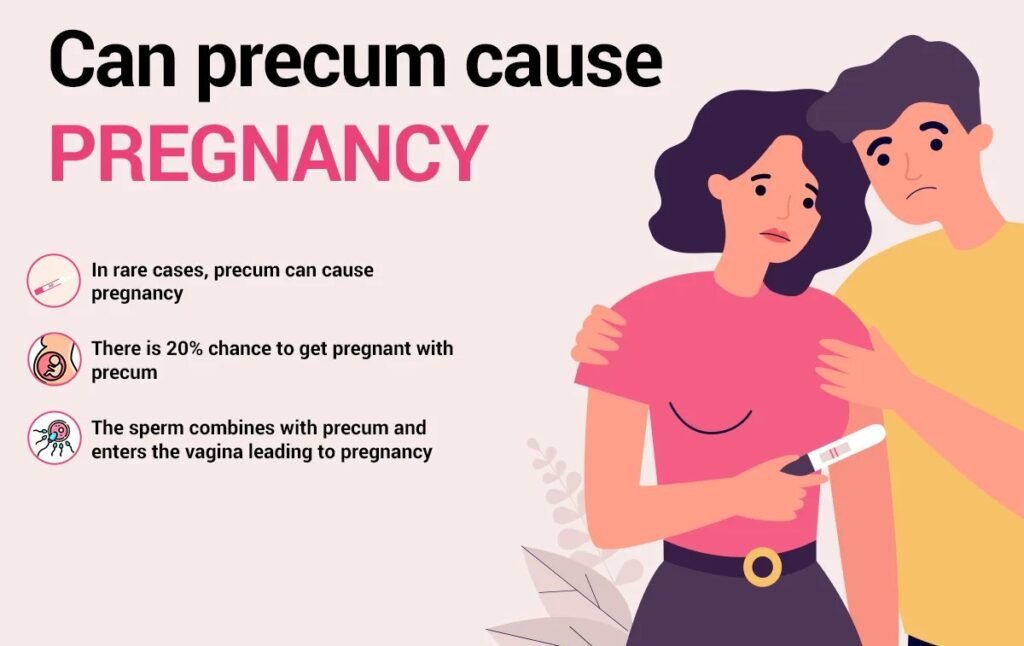
Yes, pre-ejaculatory fluid (precum) can cause pregnancy.
While pure precum produced by the Cowper’s glands does not naturally contain sperm, it can easily mix with active, viable sperm left behind in the urethra from a previous ejaculation. When precum exits the penis during sexual arousal, it washes these remaining sperm out and can carry them straight into the vagina
Why the Pull-Out Method Fails: Relying on pulling out (withdrawal) is highly unreliable due to this exact mechanism. In typical real-world use, the withdrawal method has a 20% to 22% failure rate, meaning roughly 1 in 5 couples relying on it will face an unplanned pregnancy within a year.
2. Confirmation: Taking a Pregnancy Test
If you have relied on the pull-out method or had a contraceptive mishap, checking your status with a home pregnancy test is the essential next step to gain clarity.
- Timing Matters: For the most accurate result, wait until the day after your missed period. If your cycle is irregular, take the test at least 14 to 21 days after the unprotected sexual contact.
- First Morning Urine: Try to take the test first thing in the morning when the concentration of the pregnancy hormone (hCG) is highest in your system.
- Reading a Positive Result: Home tests display results via lines or digital words. A positive test (even if the second line is incredibly faint) confirms a pregnancy.
If your test is positive, knowing exactly how far along you are is vital before looking at subsequent options.
3. Safe Management: Medical Options up to 10 Weeks
If a pregnancy is confirmed and you choose not to proceed, an unplanned pregnancy up to 10 weeks can be safely terminated using a highly effective, evidence-based medical protocol under clinical supervision.
The medical termination method utilizes two distinct medications that work together:
- Mifepristone: A 200 mg pill taken orally. It blocks progesterone, the hormone required to maintain a pregnancy, effectively halting its development.
- Misoprostol: An 800 mcg dose taken 24 to 48 hours later (dissolved in the mouth or used vaginally). This medication stimulates the uterus to contract and naturally pass the pregnancy tissue, typically mimicking a heavy miscarriage.
Clinical Follow-up: Expect heavy cramping and bleeding to begin within a few hours of taking the second medication. A follow-up appointment or tracking assessment is required 1 to 2 weeks later to confirm the uterus is completely clear and healing smoothly.


